

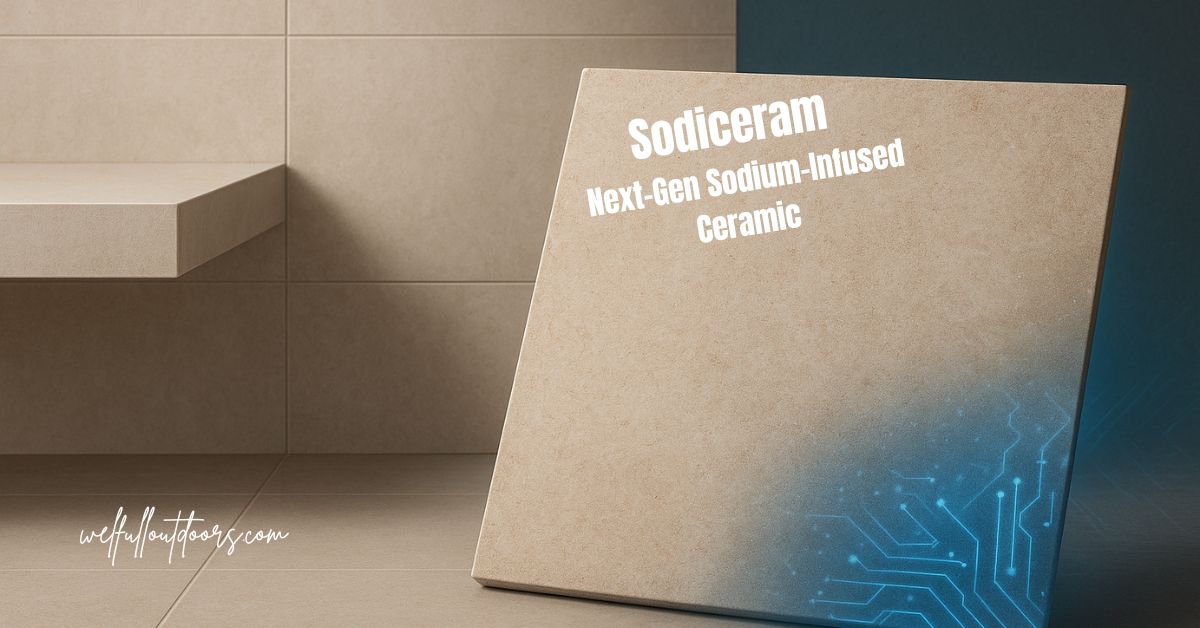
Sodiceram refers to a new class of engineered ceramic materials (and a growing set of products/brands using that name) that emphasize sodium-infused formulations to modify the microstructure and performance of traditional ceramic or porcelain bodies. In plain terms, manufacturers and writers use “Sodiceram” to describe ceramics that incorporate sodium-based compounds during formulation or firing to improve workability, firing temperature, and some mechanical traits. This term currently appears across industry write-ups, design blogs, and product pages as an emerging name for sodium-enhanced ceramic technology.
Why sodium? The materials science behind Sodiceram
Sodium salts and sodium-bearing fluxes have long been used in ceramics to lower melting points, control glaze behavior, and affect sintering. In the Sodiceram narrative, manufacturers leverage sodium-rich additives to create denser, more uniform ceramic matrices that may show improved thermal stability, reduced firing energy, and enhanced surface finish. The sodium can act as a flux during firing, altering vitrification and enabling lower-temperature processing or novel surface effects—useful both for aesthetics and production efficiency. While promising, the exact chemistry and property gains depend on formulation and process control.
Key benefits attributed to Sodiceram (what marketing and early reports claim)
Writers and product pages commonly list these advantages for Sodiceram-type materials:
- Lower energy sintering — sodium helps melt and densify at lower temperatures.
- Improved surface durability — denser matrices resist abrasion and staining.
- Lighter, thinner sections — possible due to improved mechanical performance per thickness.
- Design freedom — unique glazes/finishes and sharper printing for tiles and surfaces.
- Eco angle — lower firing temperatures and abundant raw materials are marketed as greener.
These claims appear repeatedly in product and industry posts about Sodium-infused ceramic, but they should be validated case-by-case with technical datasheets and lab tests.
Real-world applications — where Sodiceram could shine
Sodiceram is being positioned for multiple sectors:
- Architectural tiles & flooring — durable, printable surfaces and outdoor-rated slabs.
- Countertops & cladding — heat-resistant, low-maintenance finishes for kitchens and facades.
- Industrial substrates — in some writeups, sodium-modified ceramics are mentioned for insulation or electronic substrate roles where controlled electrical resistance is useful.
- Decorative art & sculptures — artists appreciate new glaze/finish effects enabled by sodium chemistry.
If you plan to specify Sodiceram for a project, request manufacturer test reports: porosity, modulus, flexural strength, frost resistance and slip rating (for floors).
Limitations & realistic cautions
No material is perfect. Reported or theoretical limitations for sodium-rich ceramics include:
- Brittleness — like other ceramics, they can fracture under point loads despite surface improvements.
- Chemical durability — sodium can affect alkali-resistance; glazes and sealants must be chosen carefully.
- Installation sensitivity — adhesives, substrate movement, and improper bedding can cause failure irrespective of material advances.
- Hype vs. data — many Sodiceram mentions come from promotional or content-farm pages; always seek lab data, certifications (EN, ASTM), and long-term warranties.
How to evaluate a Sodiceram product (technical checklist)
When comparing offerings labeled “Sodiceram” or “sodium-infused ceramic,” ask suppliers for:
- Technical datasheet (TDS) — water absorption, modulus of rupture, abrasion resistance.
- Firing temperature and energy data — to substantiate the low-energy claim.
- Certifications — CE, ISO, ANSI or local building/tiling standards.
- Sample testing — order tiles/slabs and test for slip, staining, and scratch resistance.
- Warranty & installation guide — proper fixings and recommended adhesives.
Rigorous testing separates genuine materials innovation from marketing language.
Future of Sodiceram in the Ceramic Industry
The future of Sodiceram looks promising as the ceramic industry continues to embrace innovation and sustainability. With growing demand for eco-friendly building materials, sodium-infused ceramics could become a standard choice in construction, architecture, and interior design. Advancements in 3D printing with ceramics, smart surface coatings, and energy-efficient manufacturing may further expand Sodiceram’s role in both residential and industrial applications. As research validates performance claims, we may see broader adoption, stronger branding, and global recognition of Sodiceram as a next-generation ceramic solution.
Conclusion — should you use Sodiceram?
Sodiceram, as a term and product category, reflects an interesting niche: applying sodium chemistry to boost ceramic performance. Early marketing suggests real benefits—lower firing energy, fresh surface aesthetics, and durability gains—but independent technical validation is currently limited in public literature. If you’re a specifier, designer or content creator, treat Sodium-infused ceramic as promising but nascent: insist on datasheets, samples, and third-party tests before large purchases or claims.
FAQs (quick answers)
Q: Is Sodiceram a trademarked brand?
A: There are many small pages and product mentions using the name, but no single authoritative global brand dominates the term in public registries — check local trademark databases for confirmation.
Q: Is Sodium-infused ceramic safe and non-toxic for kitchens?
A: Most ceramic bodies are inert once vitrified; however, confirm low VOC glazes and food-safe certifications for countertop uses.
Q: Will it save energy?
A: Manufacturers claim lower firing temperatures are possible, which could save energy—verify with supplier firing curves and life-cycle analysis.